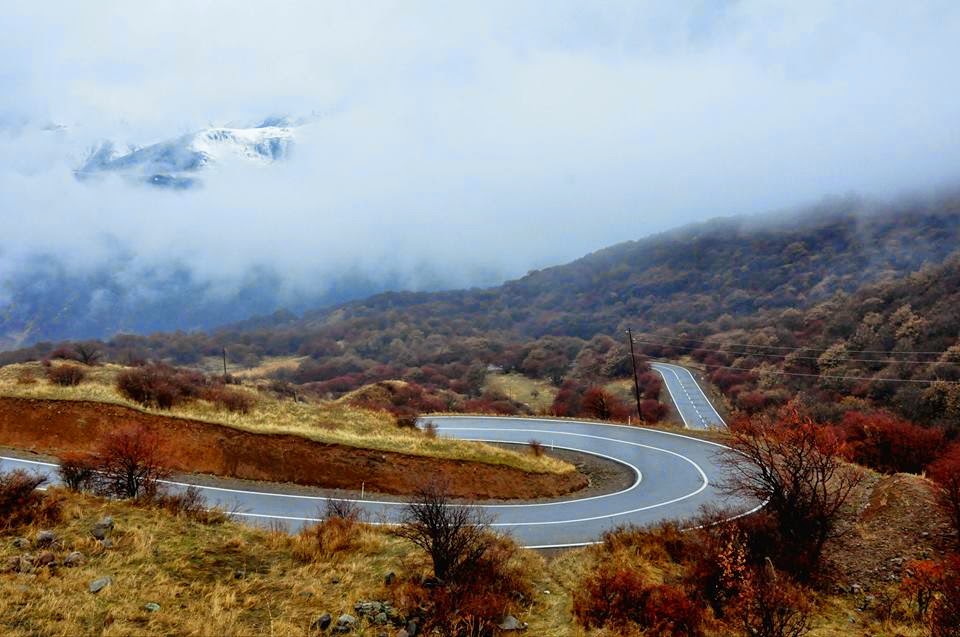
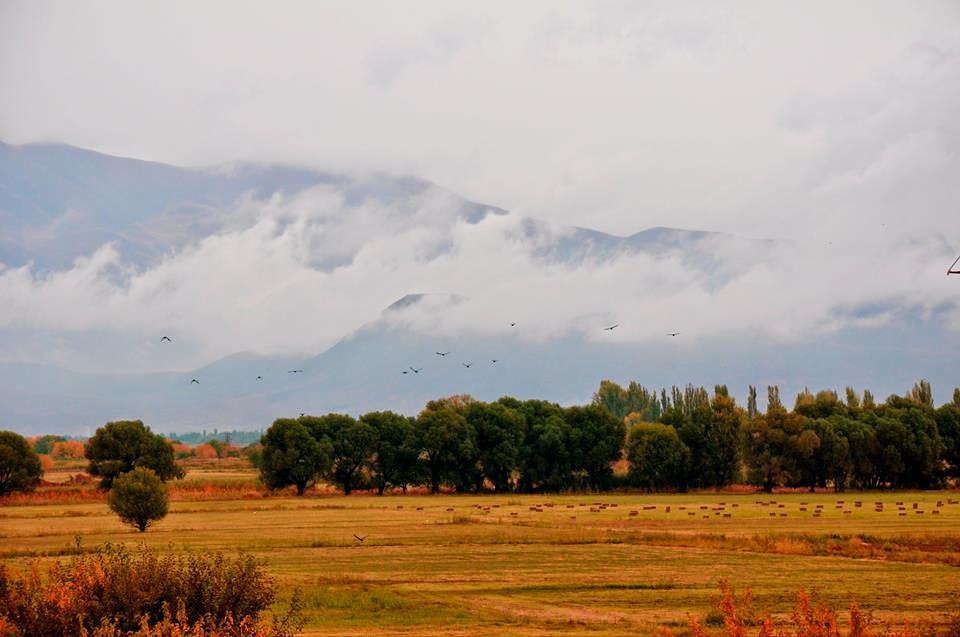
Nakhchivan Autonomous Republic is situated in the South-East of the Transcaucasus plateau. The average height above sea level is 1450 m. The most part of the territory of Nakhchivan Autonomous Republic is surrounded by the Zangazur and Daralayaz mountain chains of the Lesser Caucasus.
The highest top is the Gapichig mountain (3904 m). 1/3 of the territory constitutes the plain lands along the Araz river (Sadarak, Sharur, Boyukduz, Kangarli, Nakhchivan, Julfa, Ordubad). There are more than 200 mineral water springs (Daridagh, Badamli, Sirab, Vaykhir and others). The annual precipitation in the plain lands along the Araz river is 200-300 mm but in the high mountainous places is 500-800 mm.
There are 400 big and small rivers in Nakhchivan Autonomous Republic the length of which is 1,8 thousand km. The type of the climate in Nakhchivan Autonomous Republic is mainly dry and continental. The flora of it is very rich. There are 2782 kinds of higher plants and a rather rich animal world.
The Flora and Fauna
The rare fauna and flora of Azerbaijan are in Nakhchivan Autonomous Republic. Though the territory of Nakhchivan Autonomous Republic comprises 6,2% of the territory of the Azerbaijan Republic for its kind variety its flora comprises around 60% and fauna 56% of the country.
7 climate zones out of 11 existing in the world are met in Nakhchivan Autonomous Republic. There are about 3000 plant species, 373 animal sorts, 226 bird kinds in Nakhchivan Autonomous Republic. Rare fauna and flora are protected in the Ordubad State Reservation, Ordubad National Park named after Hasan Aliyev, Shahbuz State Nature Reservation and along the Araz State Nature reservation.
The territory of Nakhchivan Autonomous Republic consists of rich flora and various plants. The flora of Nakhchivan Autonomous Republic is rich compared with other botanic-geographic regions of Azerbaijan. 2782 kinds of supreme plants are met in this region. They in their turns assembled in 773 species and 134 families. 68 of these kinds are cultivated. Wild plants possess 123 families and 697 species. 732 kinds flora are met in the lowlands along the Araz river, 1326 kinds in the middle mountainous and 640 kinds in the highest mountainous areas. The following plants and their types in Nakhchivan Autonomous Republic divide into –deserts and halfdeserts; friganoid and bozgir plants; high pasture, subalp and Alp meadows, Alp piles; woods, oasis, along river small woods; deposit and rock plants, water march plants.
The territory of autonomous republic is distinguished from the other regions of Azerbaijan according to its natural condition and richness of fauna. The kinds of animals and its number comprises 60-80% percent of the Azerbaijan fauna. The fauna of the autonomous republic has been investigated since the second half of the 19th century. The scientists have defined 813 butterfly kinds, 134 kinds of sovca, 4 kinds of insects, 3 kinds of runaways, 4 kinds of praying mantis, 67 kinds of straight wings. 75 kinds of grasshoppers, 480 kinds of halfhardwings.
29 kinds of fishes belonging to the bony fish class were discovered in the rivers and lakes of the autonomous republic.
There are 6 kinds of amphibians and 19 kinds of reptiles in Nakhchivan Autonomous Republic.
218 knids of birds out of 366 registered in Azerbaijan live in the territory of the autonomous republic. 61 kinds of mammals are known in the area. 40 kinds of vertebral animals out of 350 kinds living in the autonomous republic were included to the “Red book”.
Geological structure and minerals- Nakhchivan Autonomous Republic drew the attention of geologists and travelers in the middle of the 18th century. Discovering the caves, wells, primary labour tools in the fields of minerals (Duzdagh, Daridagh, Shakardara, Gomur, Guyulugagh, Gizilgaya and so on) once again shows that since ancient times salt, arsenic, copper, gold, sulphur etc. were excavated in the territory of Nakhchivan and also the scientific – descriptive tractats “Javahirnama” was created in the Middle Ages in Azerbaijan. The initial geological investigations and studying of mineral wealths in the region began in the 2nd half of the 18th century. The all-round and systematic investigations of the region began thereafter establishment of Nakhchivan Autonomous Republic.
The area of Nakhchivan Autonomous Republic is situated in the Nakhchivan tecthonic zone of the Lesser Caucasus from geological point of view. Its geological structure was comprised of the hollow par with 14 km of total thickness and with aboveground volcanic eruptions. Their aboveground appearance gives an opportunity to restore their 400 thousand years old geological data. The wide spread ware stones, construction stones and glassware in the hollow deposits play a great role in the local industry.
The mineral waters-60 % of the mineral waters reserve of Azerbaijan fall to the share of Nakhchivan Autonomous Republic. Over 250 mineral water sources were stated in 5,5 thousand km2 area of Nakhchivan Autonomous Republic. The mineral waters “Badamli”, “Sirab”, “Vaykhir”, “Gulustan” and “Narzan” are popular in the world.
“Badamli”
The source of this mineral water is situated in the wonderful valley covered with almond wood and vineyard, 1400 m above sea level, at 30 km distance of the city of Nakhchivan, around the village of the same name (Shahbuz region of Nakhchivan AR).
The very place became popular for its carbonate water-narzan springs daily output of which is 2,5 mln liters.
The water contains iodine, bromine, copper, borocic acid.
One of the largest mineral water filling plants in the Caucasus operates here on the basis of the springs under use. “Badamli-5” is a wonderful beverage capable to raise appetite, to better digestive process, to stop thirsty. This water doesn’t have analogy in treating digestive diseases out of resort houses condition.
“Sirab”
“Sirab” is a “Borjomi” type popular healing-beverage water. This water is carbonated, hydrocarbonated-natrium-calcium with 2,0-2,7 g/l total mineral composition. Magnesium, bromine and calcium acids, titium, stonsium were discovered in “Sirab”. On the basis of the utilized sources “Sirab-12” of aromatic healing-beverage water filling plant operates. This water is used in gastroenteric, urine secretion canal diseases and also in metabolism disturbance. The water source is situated not far from the village of Sirab which is rather popular for the “Dashgala” architectural complex of the Bronze Age.
“Vaykhir”
Vaykhir is the richest deposit with Yesentuki type carbonated salt-alkaline waters and is situated at 17 km distance in the North from the city of Nakhchivan 1400 m above sea level. Daily output of the drilled wells is more than 2 mln liters. This water is carbonated, chloride-hydrocarbonated-natrium with 6,5 g/l total mineral composition. The water is used in gastroenteric diseases, chronical gastritis, metabolism disturbance (sugar diabet, gastritis, diathesis, ocsalanturium) illness.
“Daridagh”
Daridagh – is a rare source existing in nature which is included to the carbonated arsenic mineral waters. It is situated at 8 km distance in the North from the city of Julfa. The investigated reserves are 500 m3. it is of highly mineralized (temperature -52 0S) 21 g/l carbonated CO2 – 1,5 g/l chlorite – hydrocarbonated – natrium composition. In the same time it contains extremely more borium, iodine, bromine, stronsium and lithium. It is advisable to drink in gastroentric, joint diseases. It has an idespensable importance to take a bath in peripheral nerves diseases.
“Nahajir” is a health resort place with treatment importance in the North-East of the city of Nakhchivan. It is situated in the slopes of the Nahajir mountain. The base of the health resort reserves comprises carbonated water sources (1,3 g/l free carbonate) magnesium-hydrocarbonated-natrium and water sources with 6 g/l mineralized degree. It gives good results in digestive organs diseases and anaemia illnesses.
“Batabat”
Batabat is the climate health resort zone of healing importance situated in 1700 m above sea level, in the slopes of the Lesser Caucasus at 62 km distance in the North-East from the city of Nakhchivan.
The climate is subtropical, snowy, mild winter, dry and not very hot summer. Togother with the climate condition (aeroheliotherapy) the main healing means are the carbonated, hydrocarbonated, calcium-natrium-magnezium waters with 0,5 g/l mineralized degree. The right water is drunk in treating gastroentric diseases. The lake with sweet water, mnild climate, good scope view and very rich flora belonging to alp meadows impress on human very highly.
“Gomur”
Gomur is a high above mountain climate station. It is situated at 75 km distance of the city of Nakhchivan, 1700 m above sea level.
Very rich mineral water deposits with carbonated salt-alkali composition were discovered here. The climate of this place is mild-cold, but winter is mild and summer is cool. The Gomur health resort zone is of special importance in treating the nerve systems functional diseases, tiredness, gastroentirc and respiratory diseases.
“Sharur”
The Sharur springs are situated near the macadam road, in the South-West of Sirab village. The power of springs (daily output over 1 mln liters) gives an opportunity to bild a healing complex thanks to the waters with carbonated hydrocarbonate-chloride-natrium and with rare microcarbonated complex composition.
The rich mneral waters of Nakhchivan have opportunities to gain advantages in the world market.
|
|
|
|
|
Climate – The climate of Nakhchivan is sharp continental. A dry subtropic climate type is met in the territory of Ordubad. The absolute minimum temperature is 31 0C (Darvishlar), the absolute maximum temperature is 44 0C (Julfa).